


What Productive Rest Actually Looks Like
Rest that doesn't restore isn't rest, it's just low-output activity. The distinction matters for anyone whose work requires sustained creative and cognitive output.

My Thoughts Brought to Bare
Check out my latest thoughts and musings.

Rest that doesn't restore isn't rest, it's just low-output activity. The distinction matters for anyone whose work requires sustained creative and cognitive output.

Most personal values lists are aspirational. A personal code is operational, it governs decisions before emotions do. The difference is in how it's built and how it's used.

What the Army actually teaches, if you're paying attention, is this: The unit that runs clean rehearsals executes the mission better than the talented unit that skips them. Every time.

There's a version of your life that assembles itself if you don't intervene. It isn't bad, exactly. It's built from whatever was available; the career path your education pointed toward, the city where the job was, the relationships that formed because of proximity. Accumulated circumstance, mistaken for a life. Most people call this growing up.

Grid trading is one of the most systematically satisfying strategies in retail investing and one of the most misapplied. It works in ranging markets. It fails in trending ones. Here's the framework for using it correctly.

Your beliefs about money. Your standards for relationships. Your default behavior under pressure. Your definition of success. Your relationship with your own ambition. Where did those come from? Did you choose them, or did you inherit them? Did you build them through deliberate thinking, or did they arrive fully formed from your environment, your history, your family, your fear?

Every investing book tells you risk management is important. Almost none of them show you how to do it before you place a trade. Here's the gap and how to close it.

Let my art speak, a canvas of words.

The Trading Plan Template has ten fields. Most investors fill in three of them. This post walks through all ten — what each field is asking for, why it matters, and what a completed answer looks like.

Most investors think about returns. The system in The Savvy Investor's Playbook thinks about asymmetry. Here are the six mathematical instruments; ROI, CAGR, Sharpe Ratio, ATR, position sizing, and the break-even recovery table; every serious investor needs to understand.

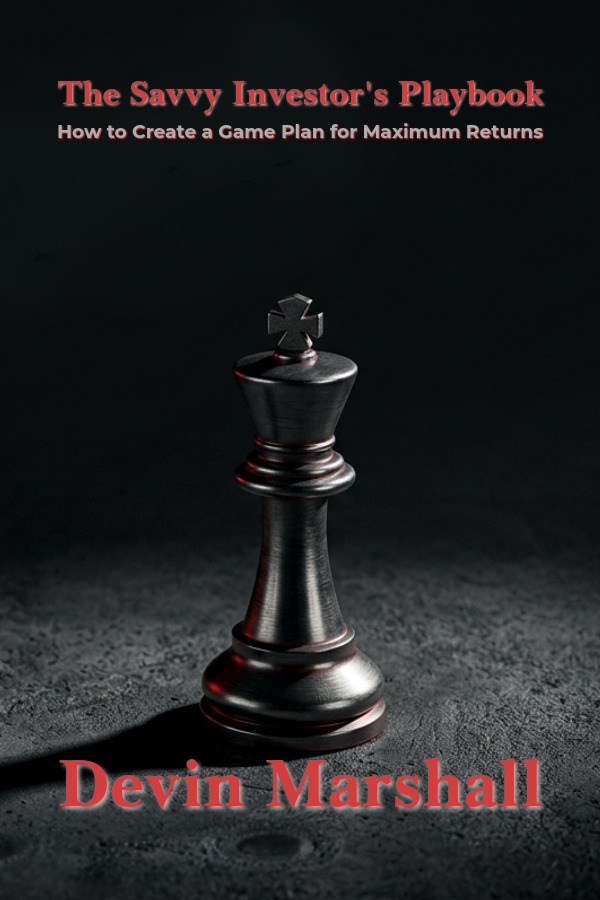
I wrote the investing book I wish I'd had when I started — a practical framework for building a game plan, managing risk, and making consistent decisions without the noise.

The chart named the pattern before I had language for it. That's the only reason any of this is worth publishing.

How you can help me to help others.
A practical system for aligning your calendar with your values so your week reflects what matters most.
Subscribe and get the free Trading Plan Template from The Savvy Investor's Playbook.
Subscribe